
Humidity is the problem encapsulation is actually built to solve — but only once the other two moisture sources have been ruled out first.
Does crawl space encapsulation help with humidity?
Yes, when humidity is the actual problem. Encapsulation removes the two inputs that drive it — moisture evaporating from bare soil and humid outside air entering through the vents — and then adds a mechanical means of drying whatever remains. What it does not do is remove liquid water.
Why does sealing help when ventilation does not?
The intuition that a damp space needs airing out is sound in a dry climate and wrong in this one. Through a Piedmont summer the outdoor air carries more moisture than the crawl space can hold at its own temperature.
Bringing more of that air in delivers more water to the coolest surfaces available. That is why crawl spaces here are frequently at their worst in a hot dry August rather than after heavy rain, and why adding vents usually makes the problem worse rather than better.
Why does a sealed space still need a dehumidifier?
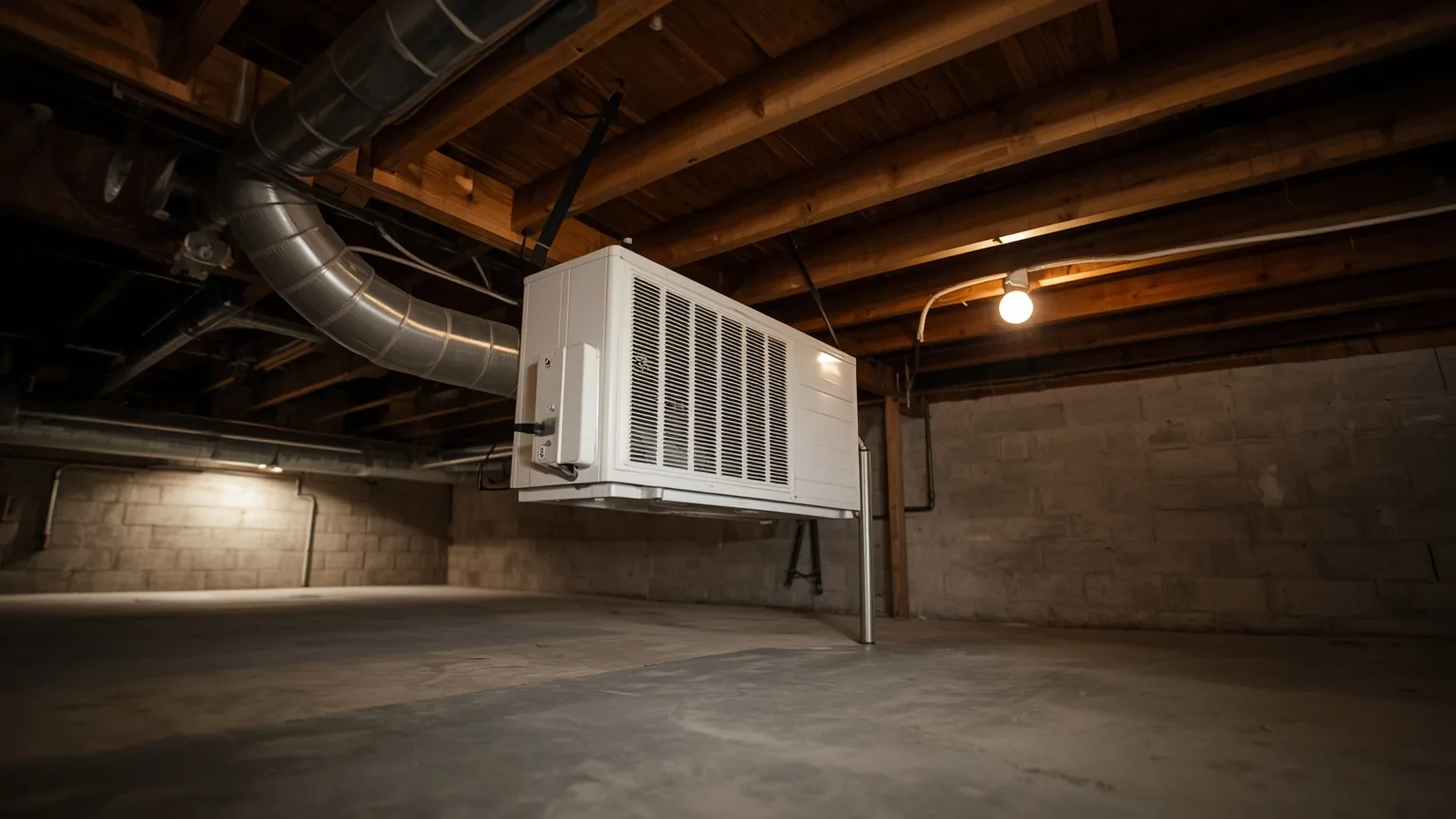
Because sealing removes the air exchange that used to carry some moisture away, along with the moisture it was bringing in. What remains has to be removed actively rather than ventilated out.
That is why mechanical drying is a component of encapsulation rather than an upgrade to it. An encapsulation proposal with no means of drying has described an enclosed box in a humid climate, which is the most common way this work fails within a couple of seasons.
What humidity level should the space hold?
The practical aim is keeping wood below the moisture content at which decay fungi become active, generally taken as around 20 percent, rather than hitting one specific air-humidity number. A humidistat you can read without crawling gives you the trend, and a sustained rise is the signal worth acting on.
When will encapsulation not fix the humidity?
When liquid water is the real input. If water enters through the walls or up through the ground, sealing the space puts a liner over it — the water carries on evaporating underneath, and the dehumidifier spends its life fighting a source nobody addressed.
That is why waterproofing comes before sealing wherever water is present. Our post on encapsulating a crawl space with existing water problems deals with that sequence directly.
How do I know humidity is my problem and not something else?
Timing is the cheapest diagnostic you have. Damp and musty in a hot, dry stretch with no recent rain points at air. Wet within hours of a storm and drying afterwards points at surface water. Wet a day or more after rain, or with no storm at all, points at groundwater.
Readings confirm it: moisture content in the framing in several places, plus relative humidity in the space. Our page on moisture control sets out how those three sources are separated.