
Crawl Space Moisture Control in Greensboro, NC
Moisture control is a diagnosis before it is a product. Ground vapor, humid air and liquid water look similar from the hatch and call for entirely different work.
Who handles crawl space moisture control in Greensboro, NC?
Greensboro Crawl Space Solutions arranges crawl space moisture control across Greensboro and the Triad. The first job is establishing which of three sources is driving the problem — vapor from the ground, humid outside air through the vents, or liquid water entering — because each has a different fix and the wrong one is expensive. Call (336) 827-3637 to arrange an evaluation.
Three sources, three different fixes
Almost every crawl space moisture problem traces to one or more of three inputs, and telling them apart is what an evaluation is for.
- Vapor from the ground. Exposed soil releasing moisture continuously. Addressed with a vapor barrier over the earth.
- Humid outside air. Warm air entering through open vents and condensing on cooler surfaces. Addressed by sealing the space and drying it — ventilation makes this worse, not better.
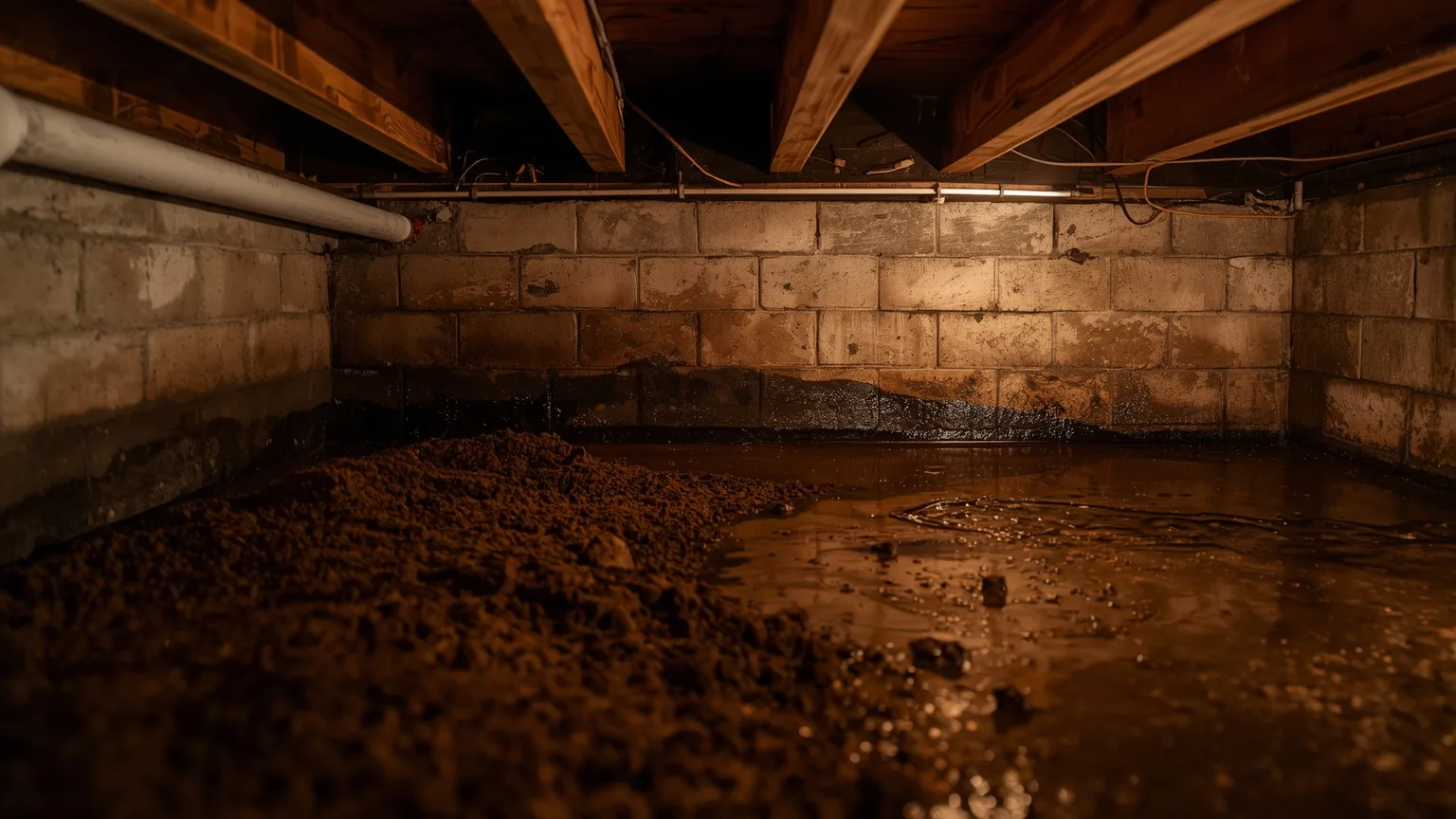
- Liquid water. Runoff, groundwater or plumbing. Addressed by drainage and waterproofing, and always before anything is sealed.
Why adding vents usually makes it worse
The intuition is reasonable: the space is damp, so let it breathe. In a dry climate that works. Here it frequently does not.
Through a Piedmont summer the outside air carries more moisture than the crawl space can hold at its own temperature. Bringing more of it in delivers more water to the coolest surfaces available — ductwork, pipes, the underside of the subfloor. That is why a crawl space in this region is often at its worst in the hottest weeks rather than the wettest ones.
What good moisture control looks like
Readings first: moisture content in the framing in several places, and relative humidity in the space. Then the source is identified rather than assumed, and the fix is matched to it.
That might be a vapor barrier alone, drainage alone, full encapsulation with a dehumidifier, or some combination. What it should never be is a single product recommended before anything was measured.
Keeping it under control afterwards
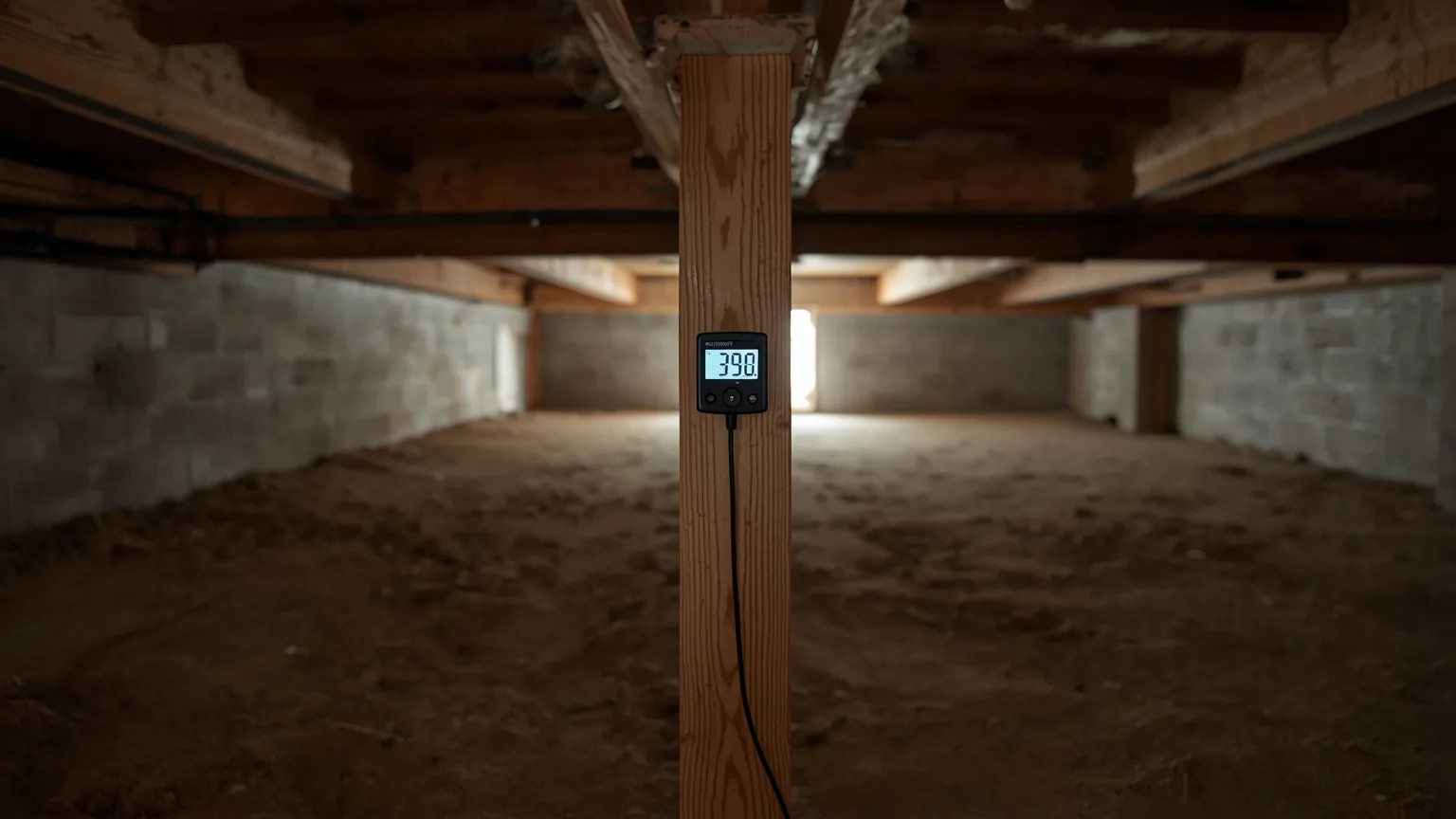
A sealed space is out of sight, so give yourself a way to see it. A humidistat you can read without crawling, a dehumidifier with a visible fault indicator, and one look under the house a year are what catch a new problem while it is still small.
Relative humidity in the space is the number worth watching. Sustained high readings mean something has changed, and it is far cheaper to find out which thing than to discover it through a floor.
August is the month that tells you what you have
Outdoor humidity in Greensboro averages near 69 percent across the year and peaks around 76 percent in August. That is the month in which a vented crawl space is under the most pressure from air rather than from rain.
It also makes for a useful diagnostic. A crawl space that is damp, musty and condensing in a hot dry August has an air problem, not a water problem — and no amount of drainage will change it. A crawl space that is wet within hours of a storm and dries afterwards has the opposite. Noticing which pattern yours follows is genuinely useful information to bring to an evaluation.
Crawl Space Moisture Control questions
What humidity level should a crawl space be at?
The practical aim is to keep the space below the range where decay fungi become active, which is generally tied to wood moisture content around 20 percent rather than to a single air-humidity figure. A humidistat you can read gives you a trend, and a sustained rise is the signal worth acting on.
Should I add more vents to dry out my crawl space?
Usually not in this climate. Through the summer, outside air carries more moisture than the crawl space can hold at its own temperature, so more ventilation delivers more water to cool surfaces. Sealing and drying is the approach that suits the conditions here.
Is a fan enough to control crawl space moisture?
A fan moves air; it does not remove water from it. Where the incoming air is itself humid, circulating more of it does not dry the space. Removing moisture requires either sealing the space and dehumidifying it, or eliminating the source.
How do I know if it's ground moisture or air?
Timing and pattern. Damp that peaks in still, hot weather with no rain points to humid air condensing. Damp that is worst on exposed soil and improves where sheeting already exists points to ground vapor. Readings taken in several places separate them.
Can moisture control be done without encapsulation?
Yes, where the source allows it. Ground cover alone addresses soil vapor. Drainage alone addresses liquid water. Encapsulation becomes the answer specifically when humid air through the vents is the dominant input, because that is the source the other two do not touch.
Related crawl space services
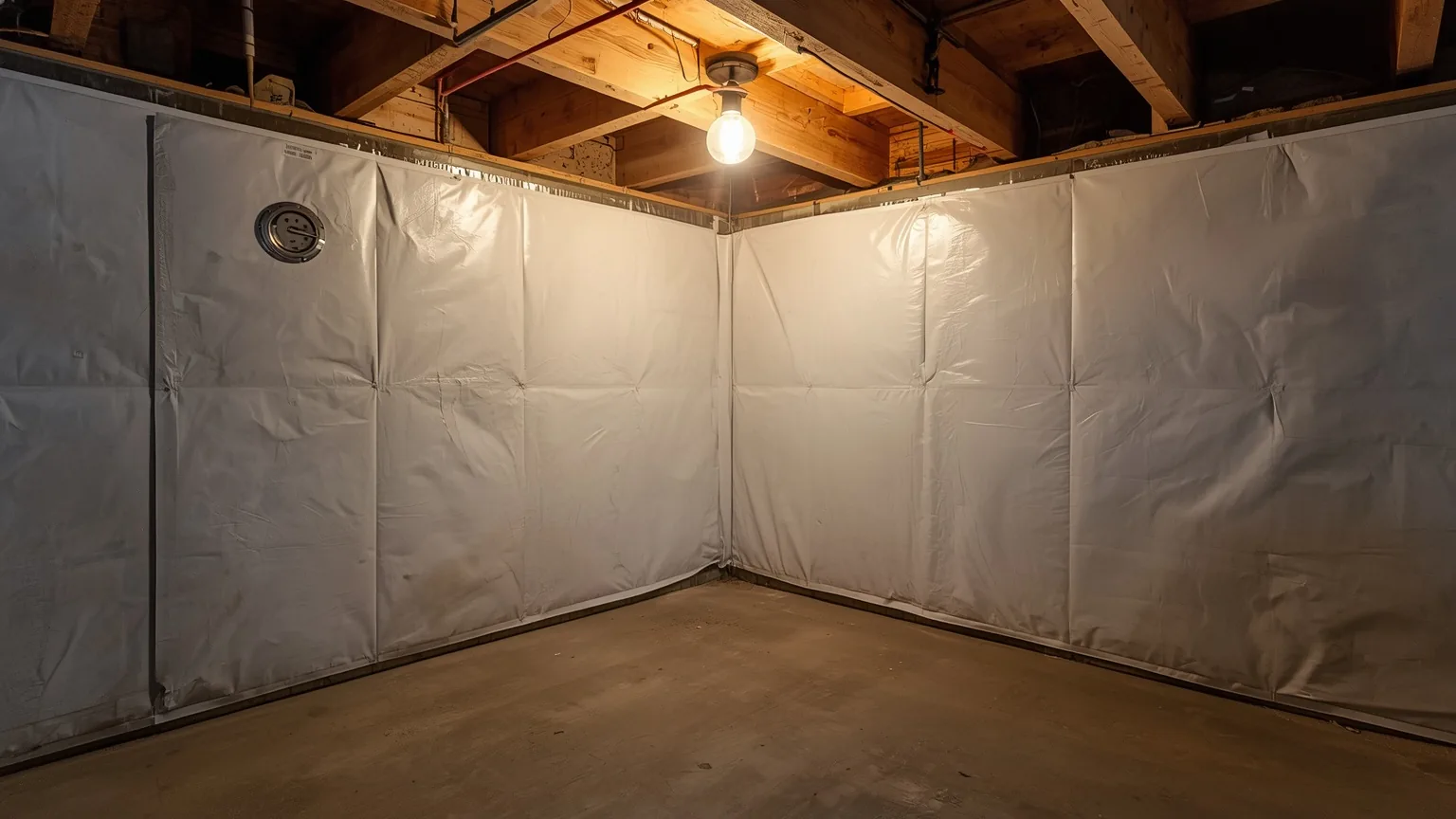
Crawl Space Encapsulation
Sealing the space off from ground and outside air, then controlling what remains.
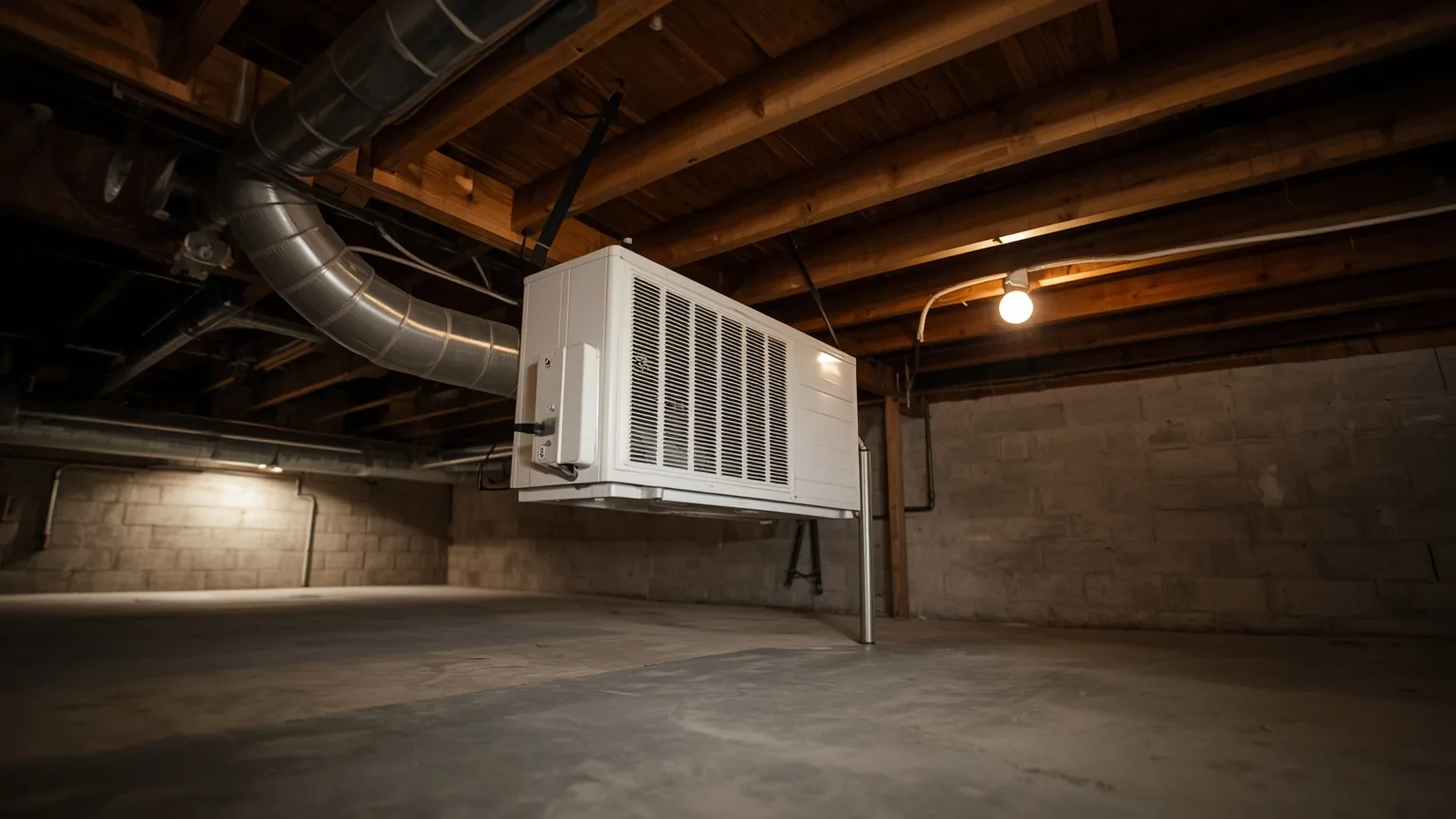
Crawl Space Dehumidifiers
Mechanical drying for a sealed space — sized, drained and on its own circuit.
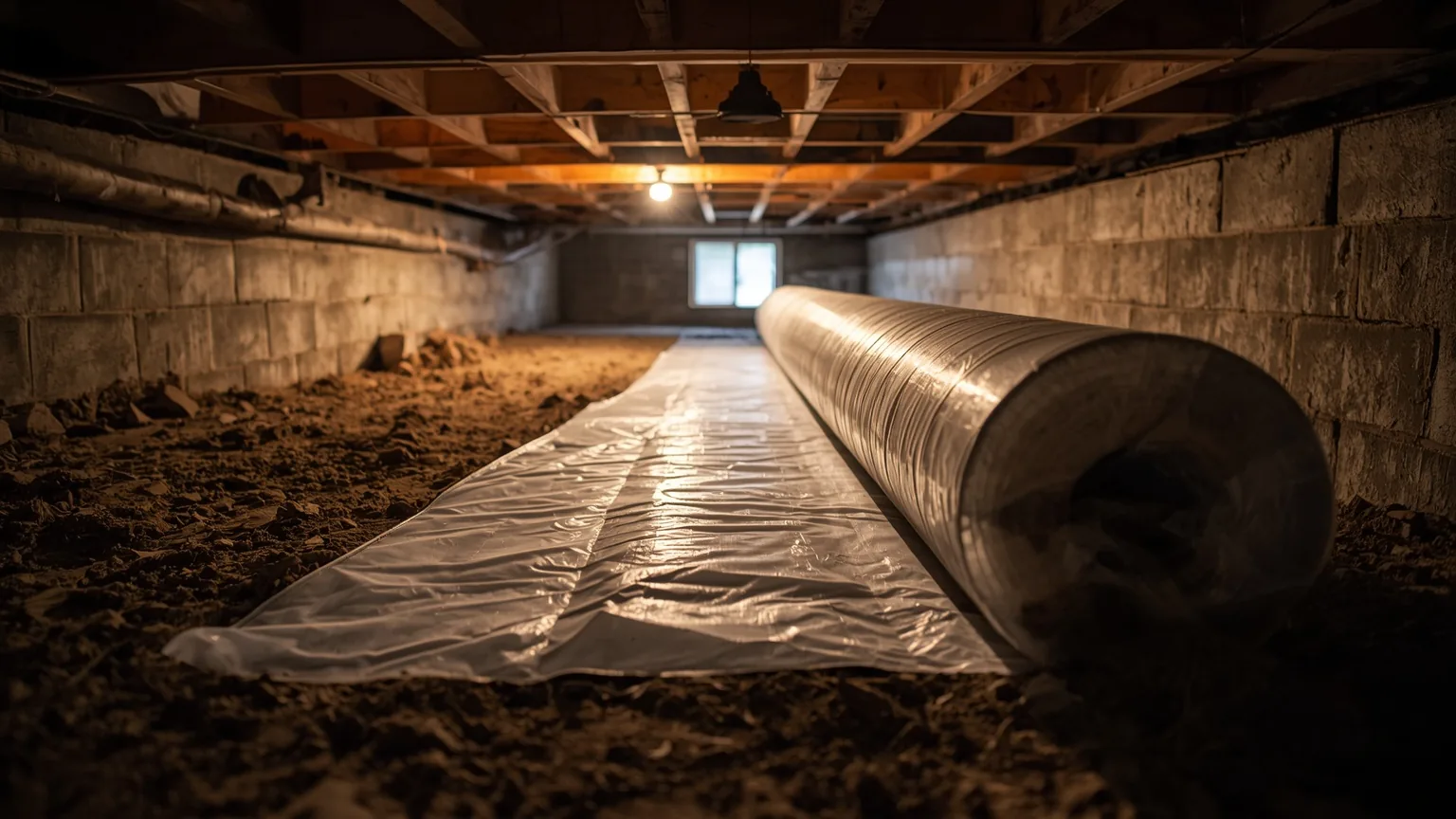
Vapor Barrier Installation
Ground cover against soil moisture, and the point where it stops being sufficient on its own.
Crawl Space Waterproofing
Stopping liquid water at the perimeter, and routing out whatever still gets in.
Find out what is actually causing it.
An inspection underneath, readings taken on site, and a written scope ahead of any figure.