
Crawl Space Repair in Greensboro, NC
Most crawl space repair in this region is moisture damage that has been running long enough to reach the framing. The repair holds only if the moisture is resolved with it.
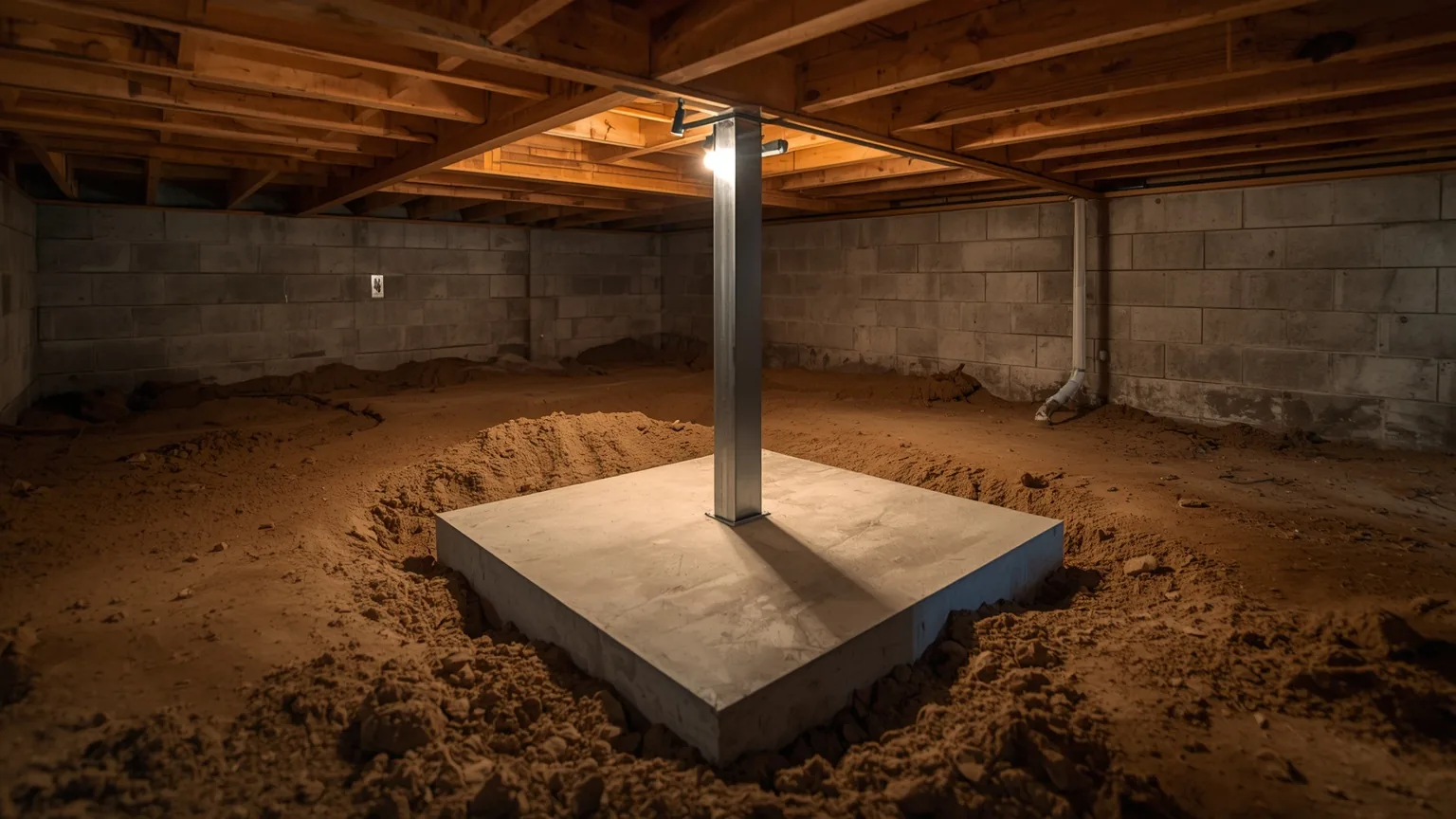
Who handles crawl space repair in Greensboro, NC?
Greensboro Crawl Space Solutions arranges crawl space repair across Greensboro and the Triad — joists and girders that have lost capacity, failed vapor barriers, wet or fallen insulation, and the drainage or humidity conditions that caused the damage. Repair without resolving the moisture puts new material into the conditions that destroyed the old. Call (336) 827-3637 to arrange an evaluation.
What usually brings a homeowner to this page
Something upstairs changed. A floor developed give underfoot, a room started to slope slightly, a door stopped closing square, or a smell appeared that cleaning does not shift. Those are symptoms read from above of a condition that has been developing below for years.
- Floors with give or slope. Framing that has lost stiffness, or a support that has settled. Bounce across a wide area suggests joists or girder support; a localized dip suggests one pier or post.
- Damaged or displaced vapor barrier. Sheeting torn, shifted or never sealed leaves exposed earth releasing moisture into the space continuously.
- Wet or fallen insulation. Batts take on moisture, get heavy and let go of the subfloor. Once hanging, they have stopped insulating and are holding moisture against wood.
- Soft or discolored framing. Joists, girders, sill plates and subfloor that have spent long periods above roughly 20 percent moisture content.
- Standing water or damp ground. An active water source. This is diagnosed and stopped before any framing work is worth doing.
Sequence is what makes a repair last
The order that holds up is: find the water, stop it, repair what it damaged, then control the humidity that remains. Reverse any two of those steps and you pay twice.
A new joist installed into a space that is still wet is living in whatever destroyed the original. That is the single most common reason a homeowner has the same work done again a few years later.
Where a repair scope should stop and an engineer should start
A good deal of crawl space repair is straightforward carpentry once the moisture is handled — sistering a joist that has lost capacity, replacing a section of girder, resetting or replacing a support.
Some of it is not. Movement affecting the foundation itself, settlement across a broad area, or damage where the load path is unclear should be assessed by a licensed professional engineer before anyone quotes a fix. A contractor who proposes jacking a structure without that assessment is making a structural decision outside their scope, and it is reasonable to say so.
What the inspection covers
The whole load path gets looked at: joists, girders, posts, footings and the sill where framing meets foundation. Moisture readings are taken in the wood in more than one location. Where water is entering is established.
You should come away with a written description of which members are affected, what is proposed for each, what is excluded, and what is being done about the moisture. Our page on what crawl space repair costs covers why that itemization is what makes two quotes comparable.
Why the damage is usually older than the symptom in Guilford County
Framing loses strength gradually as its moisture content stays elevated, and here that elevation is seasonal and repeats. Outdoor humidity averages near 69 percent across the year and peaks around 76 percent in August, so every summer supplies another stretch of months in which a vented crawl space struggles to stay below the threshold where decay becomes possible.
The result is cumulative rather than dramatic. By the time a floor feels different underfoot, the condition behind it has usually been working for several seasons — which is why a repair scope that does not also address the moisture is buying a repeat of the same work.
Crawl Space Repair questions
Are bouncy floors a crawl space problem?
Frequently, yes. Give underfoot means framing has lost stiffness, and in a house over a crawl space that usually traces to joists or a girder support affected by long-term moisture. It can also be a support that has settled. It is diagnosed from underneath, not from the room above.
Can you repair the framing without fixing the moisture?
It can be done, but it does not last. New wood placed in the conditions that destroyed the old wood follows the same path. Any scope worth accepting resolves the water and humidity as part of the same project.
Do I need a structural engineer?
Not for most crawl space repair. You do where movement involves the foundation itself, where settlement covers a broad area, or where the load path is unclear. In those cases an assessment should come before anyone quotes a repair.
How do I know whether the damage is active or old?
Moisture readings in the framing are what separate the two. Wood that dried out years ago and stabilized is a different situation from wood sitting wet now, and they call for different scopes. Readings should be taken in several places.
Is insulation replacement part of a repair?
Often. Wet or fallen insulation has to come out before framing can be assessed properly, and it is disposal cost as well as labor. Whether it goes back depends on whether the space is being sealed — in an encapsulated crawl space the insulation question changes entirely.
Related crawl space services
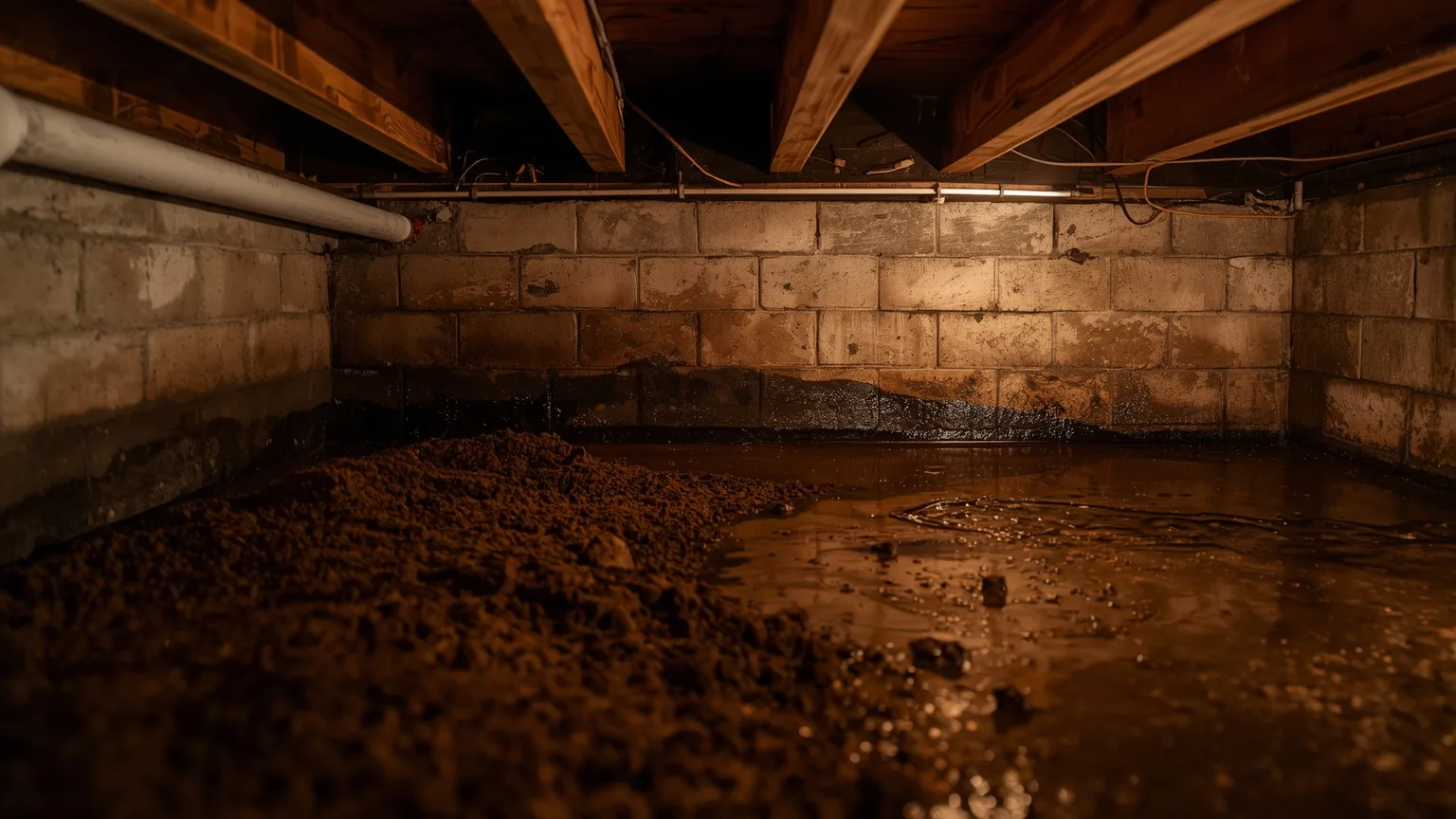
Crawl Space Waterproofing
Stopping liquid water at the perimeter, and routing out whatever still gets in.
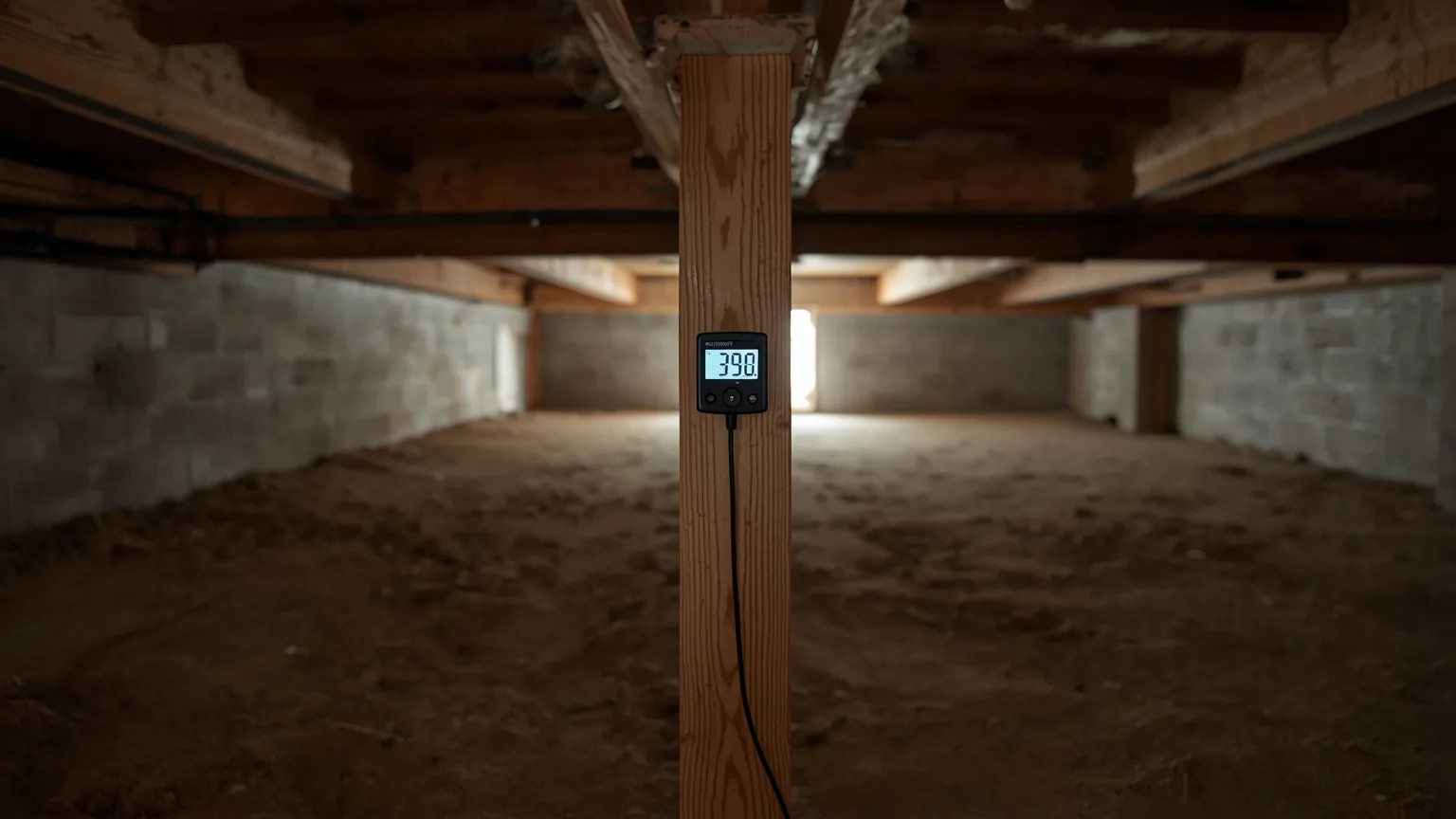
Crawl Space Moisture Control
Working out which source is driving the moisture, then matching the fix to it.
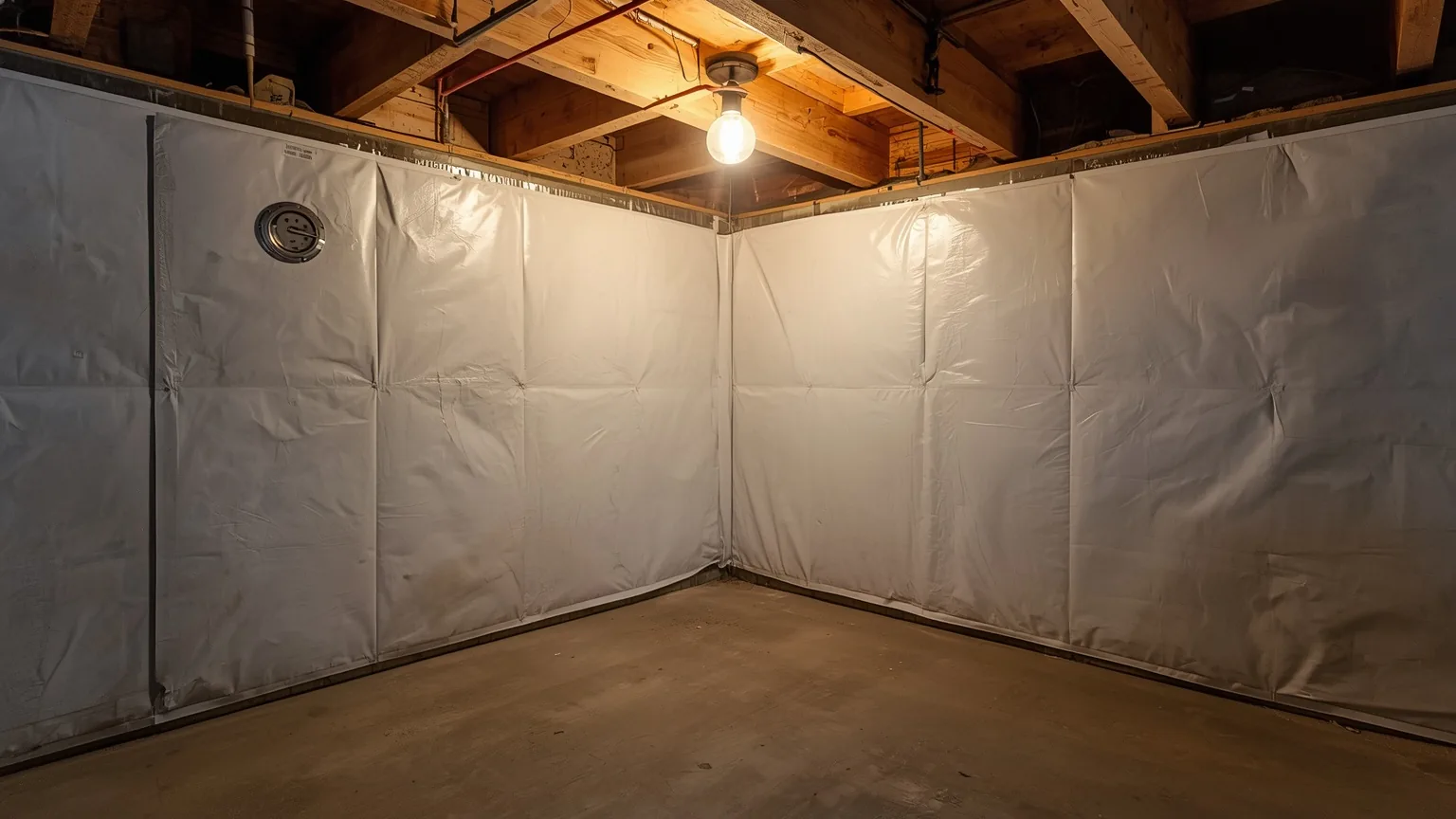
Crawl Space Encapsulation
Sealing the space off from ground and outside air, then controlling what remains.
Crawl Space Repair Cost
Why repair pricing varies so widely, and what to ask for in writing.
Find out what is actually causing it.
An inspection underneath, readings taken on site, and a written scope ahead of any figure.