
Crawl Space Vapor Barrier Installation in Greensboro, NC
A vapor barrier stops moisture rising out of the ground. That is a real and sometimes sufficient job — and it is also only one part of what encapsulation means.
Who handles vapor barrier installation in Greensboro, NC?
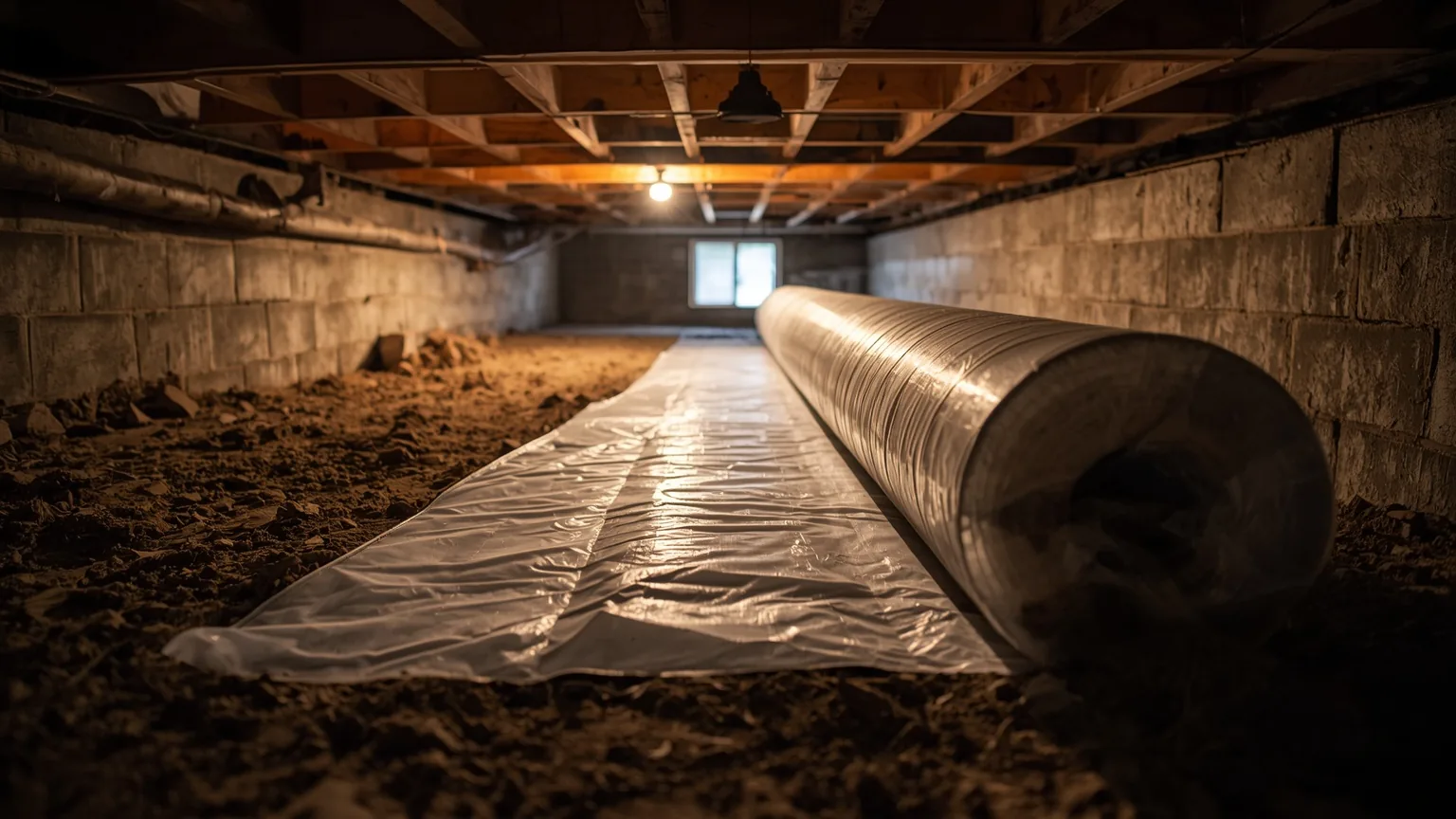
Greensboro Crawl Space Solutions arranges vapor barrier installation across Greensboro and the surrounding counties. A barrier covers exposed earth so ground moisture cannot evaporate into the space. North Carolina code sets the minimum at 6-mil polyethylene with joints lapped at least 12 inches. Whether a barrier alone is sufficient depends on where your moisture is coming from. Call (336) 827-3637 to arrange an evaluation.
What a vapor barrier is doing
Exposed soil under a house gives off moisture continuously, whether or not there is standing water on it. That moisture goes into the air of the crawl space, into the framing, and — because air moves upward through a house — partly into the rooms above.
A barrier laid over that ground interrupts the transfer. It is a genuinely useful piece of work and in the right circumstances it is the whole job.
What NC code sets as the floor
R409.2.1 requires a minimum 6-mil polyethylene vapor retarder or equivalent, installed to nominally cover all exposed earth, with joints lapped not less than 12 inches. That is the published minimum, not a premium specification.
Heavier reinforced liners are common in practice and are more durable underfoot, which matters if anyone will be working in the space again. But if an estimate is vague about thickness or lap, the code gives you a floor to hold it to.
One practical difference worth knowing: ground cover on its own does not turn the space into a closed crawl space, so it does not bring the R409.5 mechanical drying requirement with it. That also affects permitting, since the permit trigger for a conversion comes from the electrical or HVAC work those drying methods involve. Requirements still depend on the scope and the jurisdiction, so confirm with the local inspections office before work starts.
Where a barrier alone is enough — and where it is not
It can be sufficient where the ground is the dominant moisture source, the space is otherwise dry, and the vents are not delivering large humidity loads.
It falls short against the mechanism that dominates a Piedmont summer: warm outdoor air entering through open vents and condensing on surfaces below its dew point. A barrier on the ground does nothing about moisture arriving as air. Where that is the driver, the answer is encapsulation with a means of drying, and the barrier is one component of it.
It also does nothing about liquid water. Sheeting over a floor that takes on water simply floats on the problem.
Replacing a barrier that has failed
Existing sheeting is often torn, displaced by anyone who has worked in the space, or was never sealed at the seams and edges in the first place. Partial coverage does part of a job.
Replacement is straightforward work, and it is a reasonable point at which to ask whether the space needs more than a barrier — because if the same barrier has failed twice, the conditions rather than the material may be the issue.
Ground moisture where the soil sheds water slowly
The soils around Greensboro weather from mafic and intermediate rock, and the USDA classes the saturated hydraulic conductivity of the locally-described Enon series as moderately low. Ground that parts with water slowly stays damp longer after rain, and damp ground under a house is a moisture source for as long as it stays that way.
That is the case for ground cover here being worthwhile even in spaces that never show standing water. It is also why a barrier is so often only the first component: slow-draining ground and humid summer air are two separate inputs, and covering the ground addresses one of them.
Vapor Barrier Installation questions
What thickness vapor barrier does NC require?
R409.2.1 sets a minimum of 6-mil polyethylene or equivalent over all exposed earth, with joints lapped not less than 12 inches. Heavier reinforced liners are common and more durable, but 6-mil is the published floor.
Is a vapor barrier the same as encapsulation?
No. A vapor barrier covers the ground. Encapsulation includes the barrier but adds sealing the vents and rim joists, carrying liner up the walls, and actively managing the humidity that remains. The barrier is one component of the larger job.
Will a vapor barrier fix my humidity problem?
It will remove ground moisture as an input. If the dominant source is humid outdoor air coming through open vents — common here in summer — the barrier alone will not resolve it, because that moisture arrives as air rather than from the soil.
Does the barrier go up the walls?
In a barrier-only installation it generally covers the ground. Carrying liner up the foundation walls and terminating it there is part of encapsulation rather than of ground cover, and it is one of the visible differences between the two scopes.
Can I install a vapor barrier over standing water?
You can, and it achieves very little. Sheeting laid over water traps it underneath where it continues to evaporate against the underside and keeps working on the framing. The water is addressed first.
Do I need a permit just to install a vapor barrier?
Ground cover alone does not create a closed crawl space, so it does not trigger the mechanical drying requirement that drives the permit for a full conversion. Requirements still depend on scope and jurisdiction, so confirm with the City of Greensboro or Guilford County inspections before work begins.
Related crawl space services
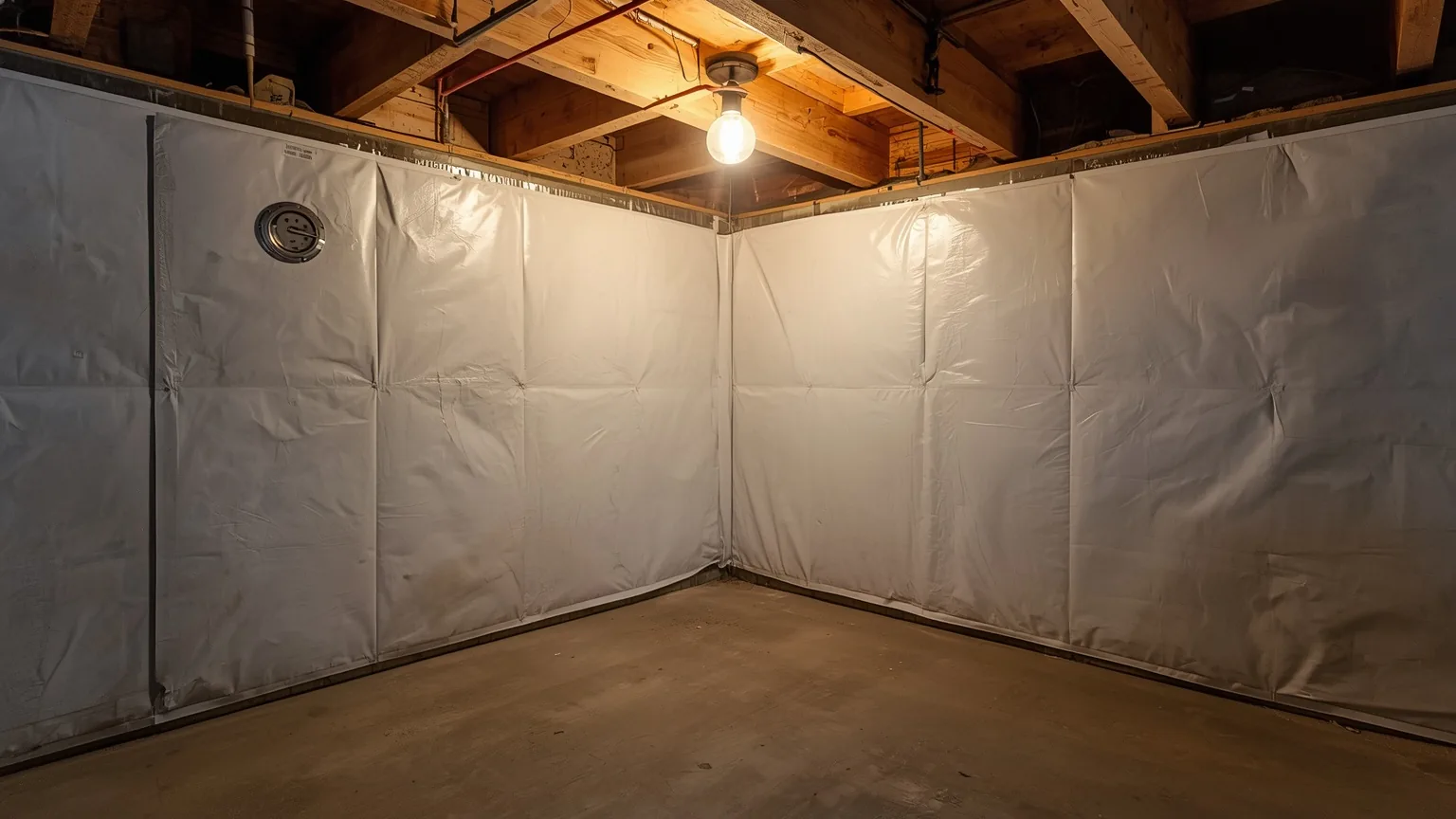
Crawl Space Encapsulation
Sealing the space off from ground and outside air, then controlling what remains.
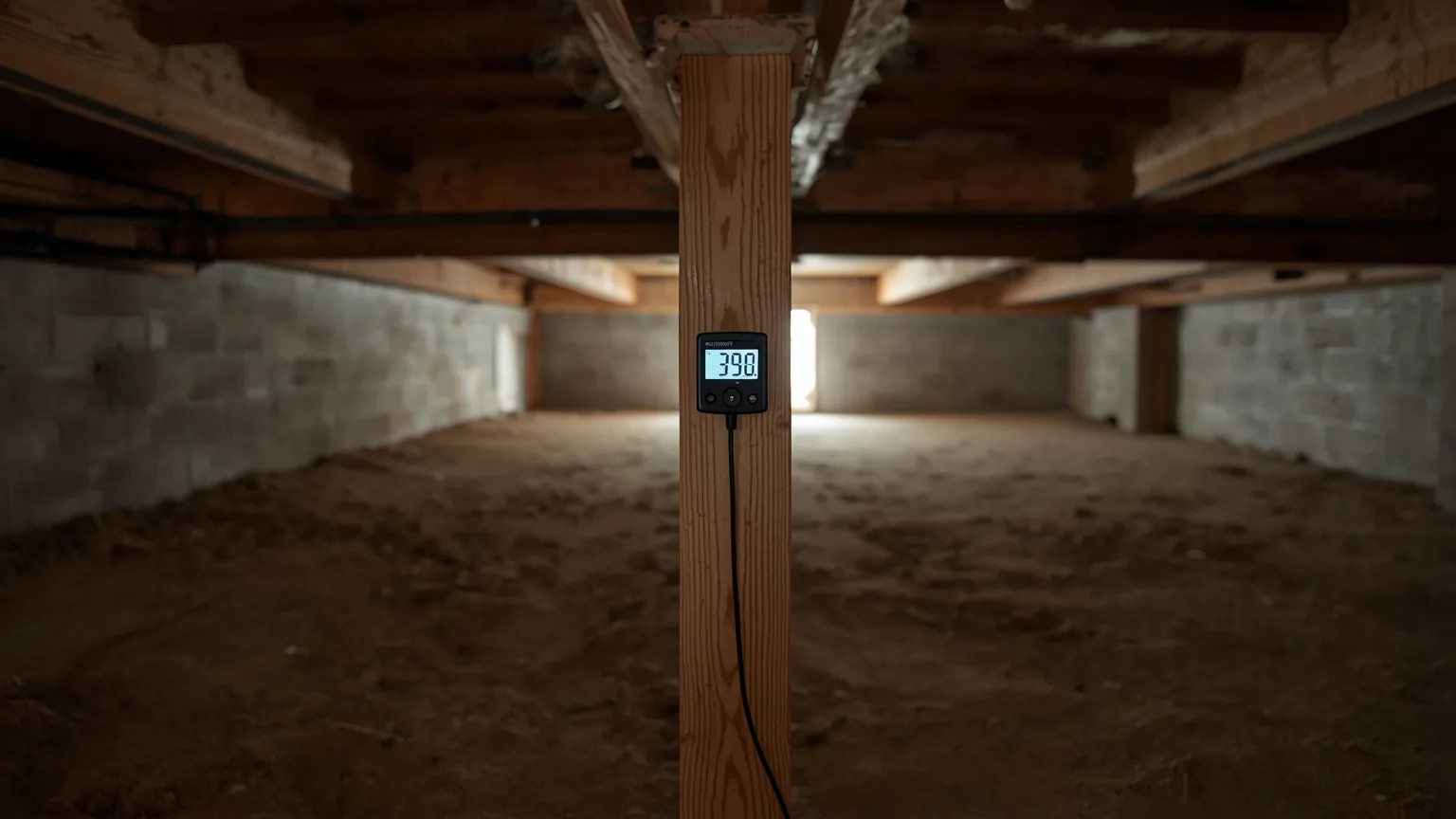
Crawl Space Moisture Control
Working out which source is driving the moisture, then matching the fix to it.
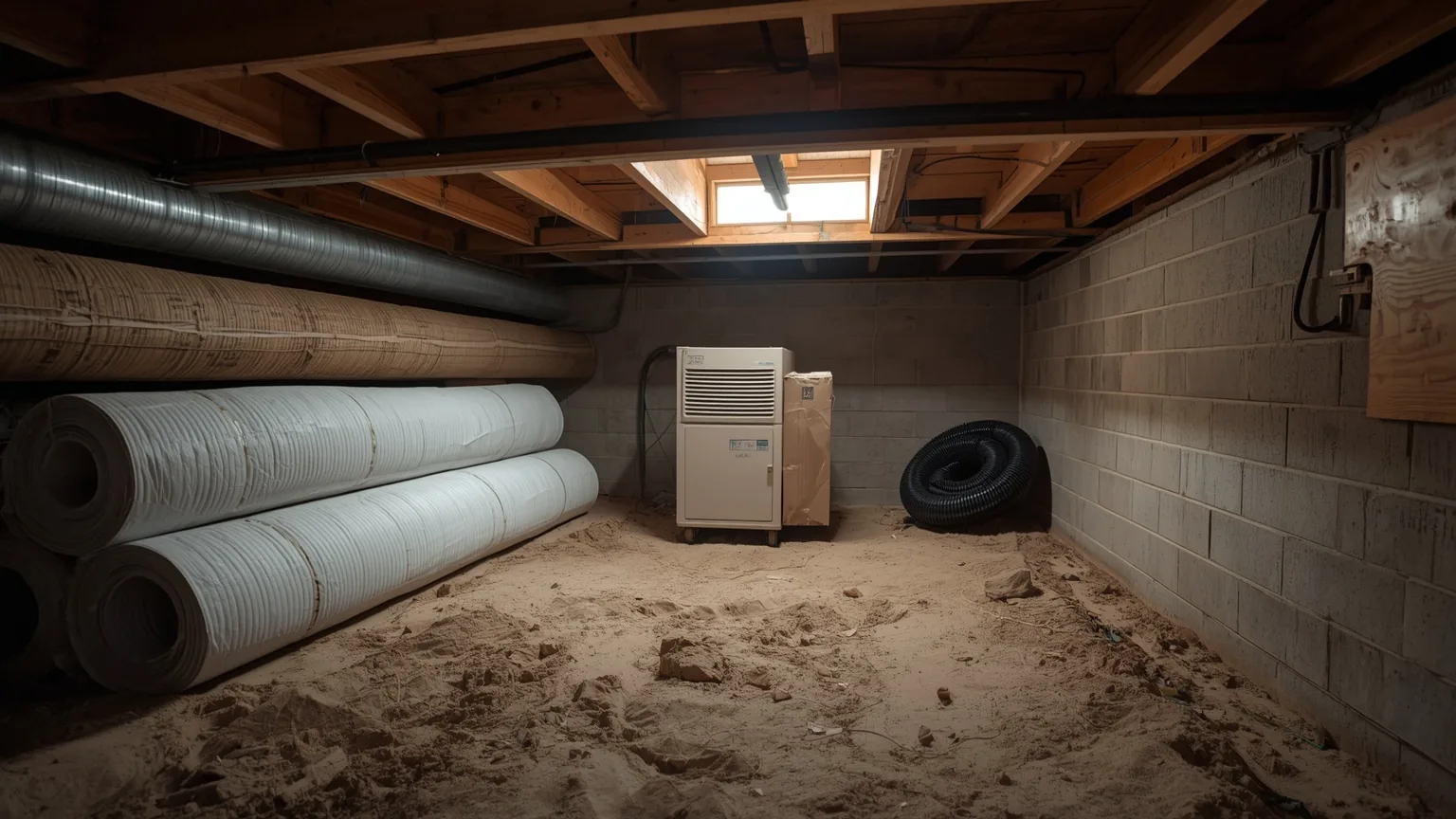
Crawl Space Encapsulation Cost
What moves the number — and how to compare two estimates properly.
Find out what is actually causing it.
An inspection underneath, readings taken on site, and a written scope ahead of any figure.