
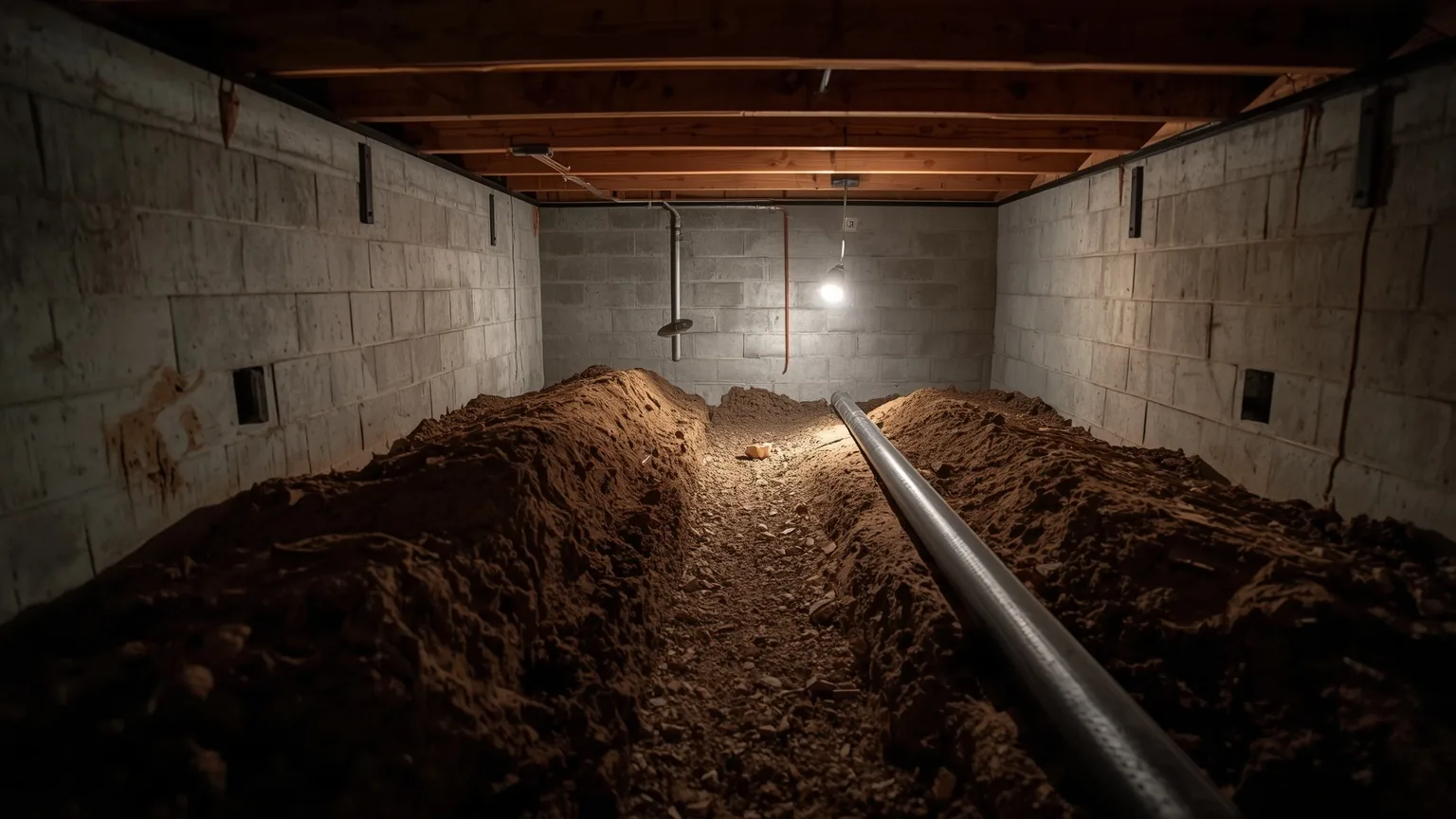
The short answer is no — not in that order. This is the single most expensive sequencing mistake in crawl space work, and it is common enough to be worth explaining properly.
Should you encapsulate a crawl space that has water problems?
Not before the water is resolved. Encapsulation manages water vapor and humidity; it does nothing about liquid water. A liner installed over a space that still takes on water seals that water underneath it, where it continues doing exactly what it was doing — now out of sight.
What actually happens if you seal over water?
Three things, none of them good. The water keeps evaporating against the underside of the liner, so the humidity you paid to control has a source inside the sealed envelope. The dehumidifier runs against that source indefinitely. And the framing above continues to sit in the conditions that were damaging it, with the difference that nobody can now see it happening.
The encapsulation you bought becomes the thing concealing the problem. That is why the damage found in these cases is often much further along than the homeowner expected.
How do I know if I have a water problem or just humidity?
Liquid water on the ground is a water problem. Damp, musty air with no standing water is usually a humidity problem. The timing helps: water within an hour of a storm is surface runoff, water a day or more later is groundwater, and water independent of weather points at plumbing.
Our post on what causes standing water works through each of those in more detail.
What is the correct order?
- Find and stop the water. Surface causes first — gutters, downspouts, grading — because they are cheap. Then interior drainage and a sump system if water is genuinely arriving through the ground.
- Repair what the water damaged. Framing that has lost capacity gets addressed before it is sealed away behind a liner.
- Seal and dry. Now encapsulation is managing vapor rather than covering water, and the dehumidifier is sized against a finite load.
Does NC code have anything to say about this?
It does, and it is useful leverage. The closed crawl space section requires the floor to be graded so that it drains to one or more low spots, with a drain to daylight or a sump pump at each low spot, and requires those drains to be kept separate from roof gutter drains and foundation perimeter drains.
In other words, drainage is part of what a closed crawl space is supposed to have. An encapsulation proposal for a wet crawl space that includes no drainage is not a cheaper version of the right job.
What should I do with an estimate that skips this?
Ask directly whether standing water was observed, and if so what in the scope addresses it. A contractor who saw water and quoted a liner has described work that will not solve your problem.
Ask for the moisture readings and where they were taken. Our page on encapsulation cost covers why itemized scopes are the only way to compare two estimates that use the same word.